
The Santorini Edit: Your Complete Guide to the Caldera's Most Iconic Island
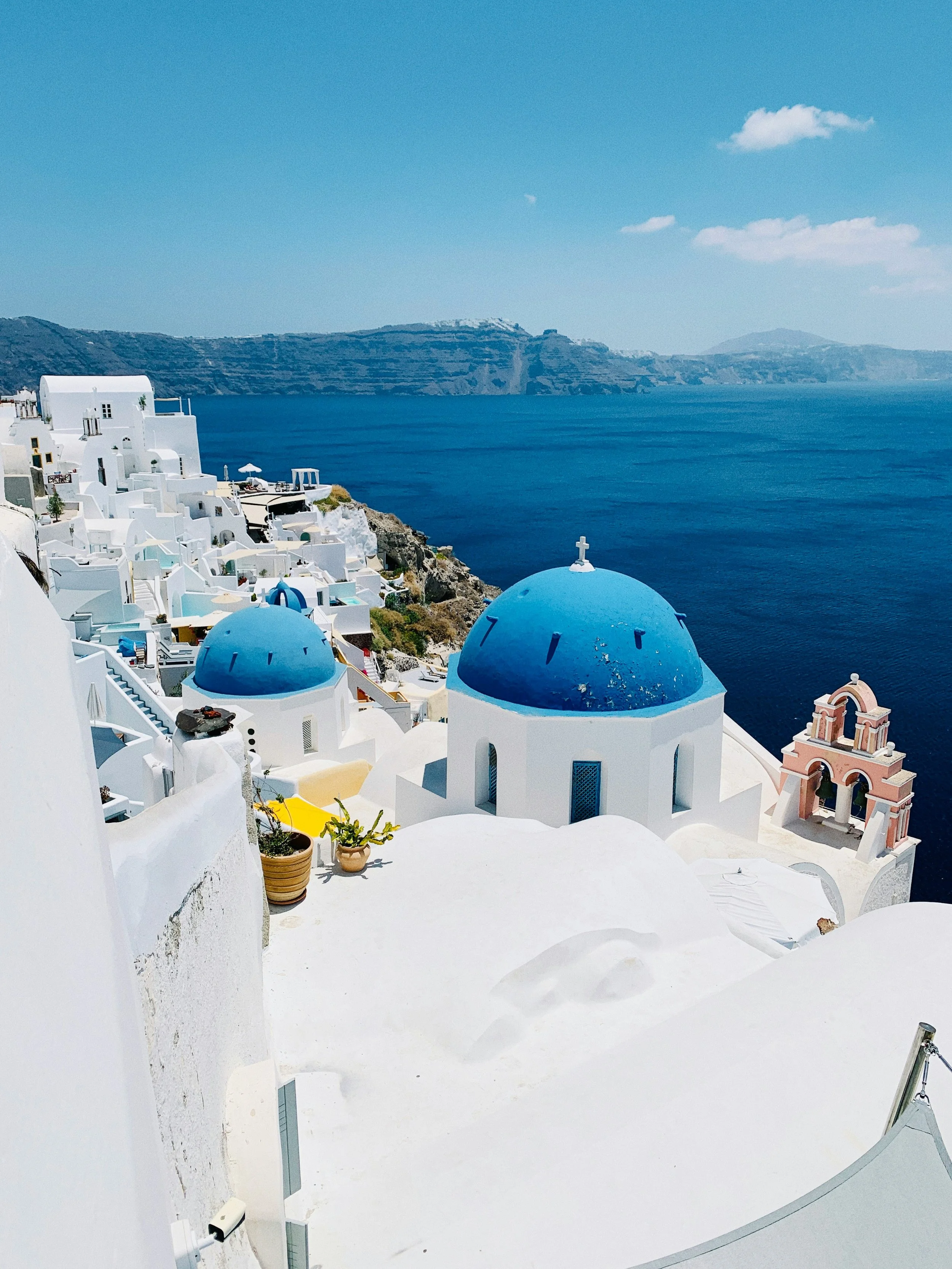
The Poshworthy Passport — June Destination of the Month
Six months into this year's Passport, and June brings us to the island that arguably invented the modern idea of the "bucket-list photo." Santorini needs almost no introduction, the whitewashed cave houses, the blue-domed churches, the caldera plunging into the Aegean, the sunset that has launched a thousand engagement announcements. What it needs is a plan, because this is one of the most crowded, most expensive, and most easily-gotten-wrong destinations on the entire year's calendar.
Done properly, though, Santorini earns every bit of its reputation. This is your guide to doing it properly and doing it luxuriously.
Why Santorini Is a Poshworthy Pick
Santorini is a genuine geological marvel wearing the clothes of a postcard: a volcanic caldera, formed by one of the largest eruptions in recorded history, ringed by cliffside villages perched 200 meters above the water. The caldera-facing west coast (Oia, Imerovigli, Firostefani, Fira) is where the famous views live; the island's quieter eastern and southern half holds black-sand beaches, wineries, and the inland villages most visitors never see.
What makes this a Poshworthy pick specifically: Santorini rewards travelers who plan with real intention. The difference between a mediocre Santorini trip and a transcendent one almost entirely comes down to timing, hotel choice, and knowing which crowds to avoid — which is exactly the kind of precision this brand exists to deliver.
Who This Trip Is Perfect For
The proposal or honeymoon — few places on earth have made "romance" quite as literal a business model as Oia at sunset.
The milestone celebration that wants maximum visual payoff — a significant anniversary, a "we built something real" trip.
The girls' trip built around a shared catamaran day — the caldera sail is the island's essential shared-memory experience.
The design- and wine-obsessed traveler — volcanic-soil Assyrtiko, cave architecture, and some of the most photographed hotel pools in the world.
A destination best done once, done properly — this is not a repeat-every-year island for most travelers; it's the trip you plan carefully and remember for decades.
The Essentials at a Glance
Best time to visit: Late April through June, and September through mid-October, offer the best balance of weather and crowds. June specifically has two distinct moods: early June is warm, lively, and still has some breathing room — genuinely the best window for a first Santorini trip, a honeymoon, or a beach-and-caldera vacation. Late June shifts noticeably closer to July's peak-season intensity, with higher prices, fuller restaurants, and busier sunset crowds. If your dates are flexible within the month, front-load them.
June weather: Daytime temperatures range 25–35°C (77–95°F), with essentially guaranteed sunshine — rain is a genuine rarity. Evenings are warm enough that a light jacket is more precaution than necessity.
Getting there: Santorini Airport (JTR) connects via a 45-minute flight from Athens, or seasonal direct flights from major European cities in summer. The alternative — a high-speed ferry from Athens' Piraeus port — takes 5–8 hours and offers a genuinely scenic arrival, cliffs rising dramatically from the water as you approach. A popular compromise: ferry in for the experience, fly out to save time.
Currency: The Euro (€). Cards are widely accepted at hotels and restaurants; carry cash for smaller tavernas and local shops.
Getting around: Most visitors don't need a car if based in Oia or Fira — everything is walkable, and taxis/private transfers cover the rest. For a single dedicated exploration day (Akrotiri, Red Beach, wineries, Pyrgos), renting a small car or ATV for that day only is the smart move — pick it up in the morning, return it that night, and avoid paying for a car that sits unused outside your caldera hotel.
A crucial booking note: the best hotels sell out 6 to 9 months ahead for June through August. If a specific caldera-view property is non-negotiable for your client, this is not a trip to plan on short notice.
Ideal trip length: Three nights is the minimum for a proper first visit; five days is ideal if budget and time allow, giving room to slow down rather than checklist the island.
Where to Eat & Drink
The Island's Most Decorated Table
Selene, inside Katikies Garden in Fira — Santorini's most decorated restaurant, founded in 1986 and now led by Michelin-starred chef Ettore Botrini, built around a four-decade argument that the island's volcanic soil produces genuinely extraordinary ingredients. A multi-course tasting menu centered on fava, capers, white aubergine, and Assyrtiko-cured fish.
The Proposal Table
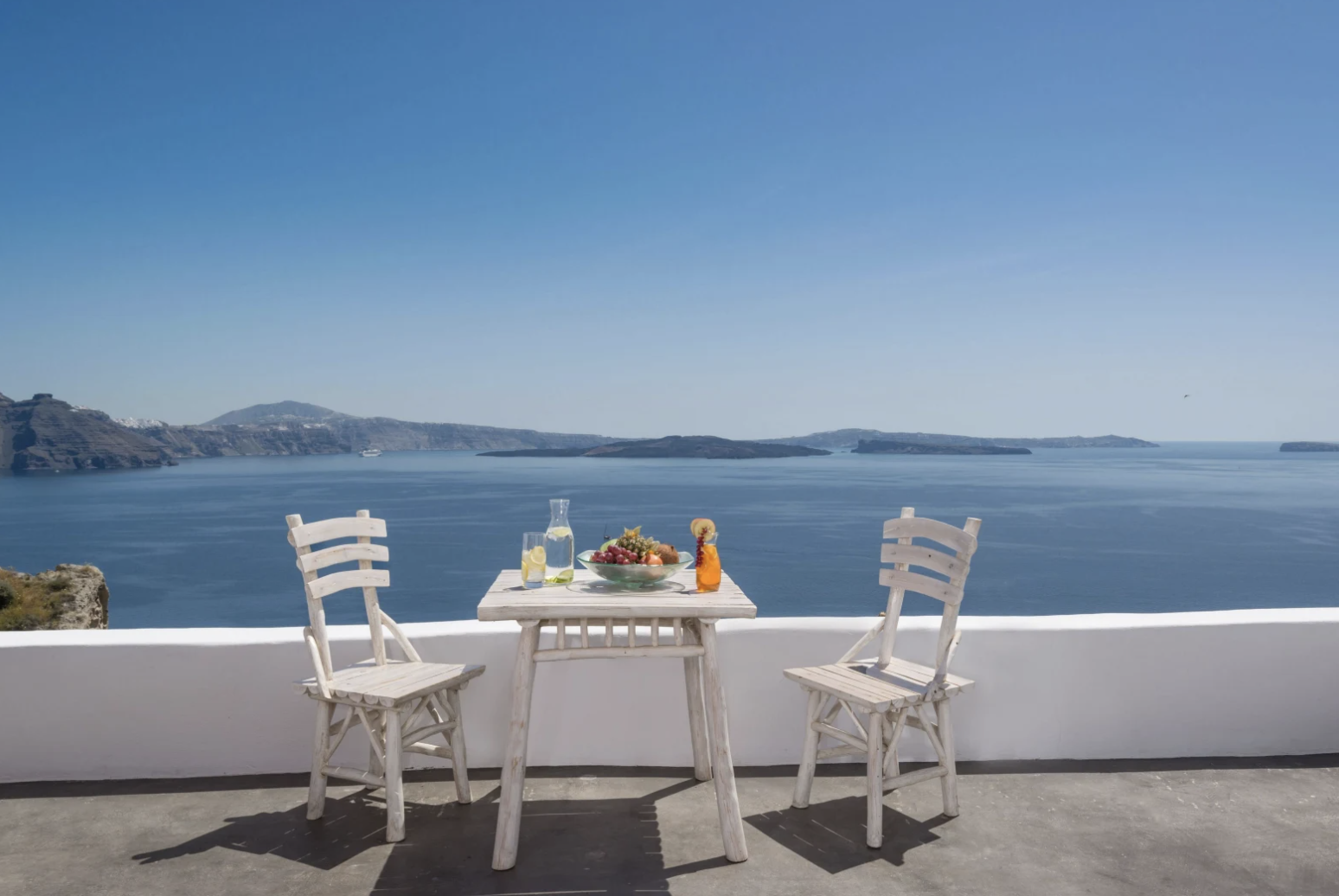
Lauda, at Andronis Boutique Hotel in Oia — operating since 1971, with a terrace directly above the caldera and sunset access beginning at 19:45. The island's most-photographed engagement spot for over five decades; specify the table closest to the cliff edge when booking.
The Michelin Seafood Icon
Varoulko Santorini, at Grace Hotel — chef Lefteris Lazarou's Athens-earned Michelin star applied entirely to Aegean seafood, with a counter seating that suits solo dining beautifully as well as a couple's evening.
For the Best Food on the Island (Not Just the View)
Metaxi Mas, tucked in the quiet village of Exo Gonia behind the Agios Charalambos church, is widely cited as the island's best overall food — Cretan- and Santorini-leaning, with quality that consistently outpaces the more touristy caldera-view spots. Reserve at least a week ahead in summer; cash is preferred.
A Genuinely Useful Local Insight
Greek dinner runs late — locals sit down around 21:30, while the caldera-cliff restaurants front-load early sittings for tourist sunset demand. Booking a later table (21:30 rather than 20:00) puts you in a noticeably different, more local room.
What to Actually Order
Seek out the volcanic-soil specialties: fava (a Santorini yellow split-pea puree), tomatokeftedes (tomato fritters), white eggplant, and the island's signature Assyrtiko wine — a crisp, mineral white grown in low, basket-shaped vines specifically adapted to the island's wind and volcanic soil. For dessert, melitinia, Santorini's traditional sweet cheese tart, and proper baklava, oozing honey.
The Signature Santorini Experience: The Caldera Catamaran
If Amalfi's defining luxury experience is the private yacht day, Santorini's is the caldera catamaran cruise and it is genuinely not optional for a first visit.
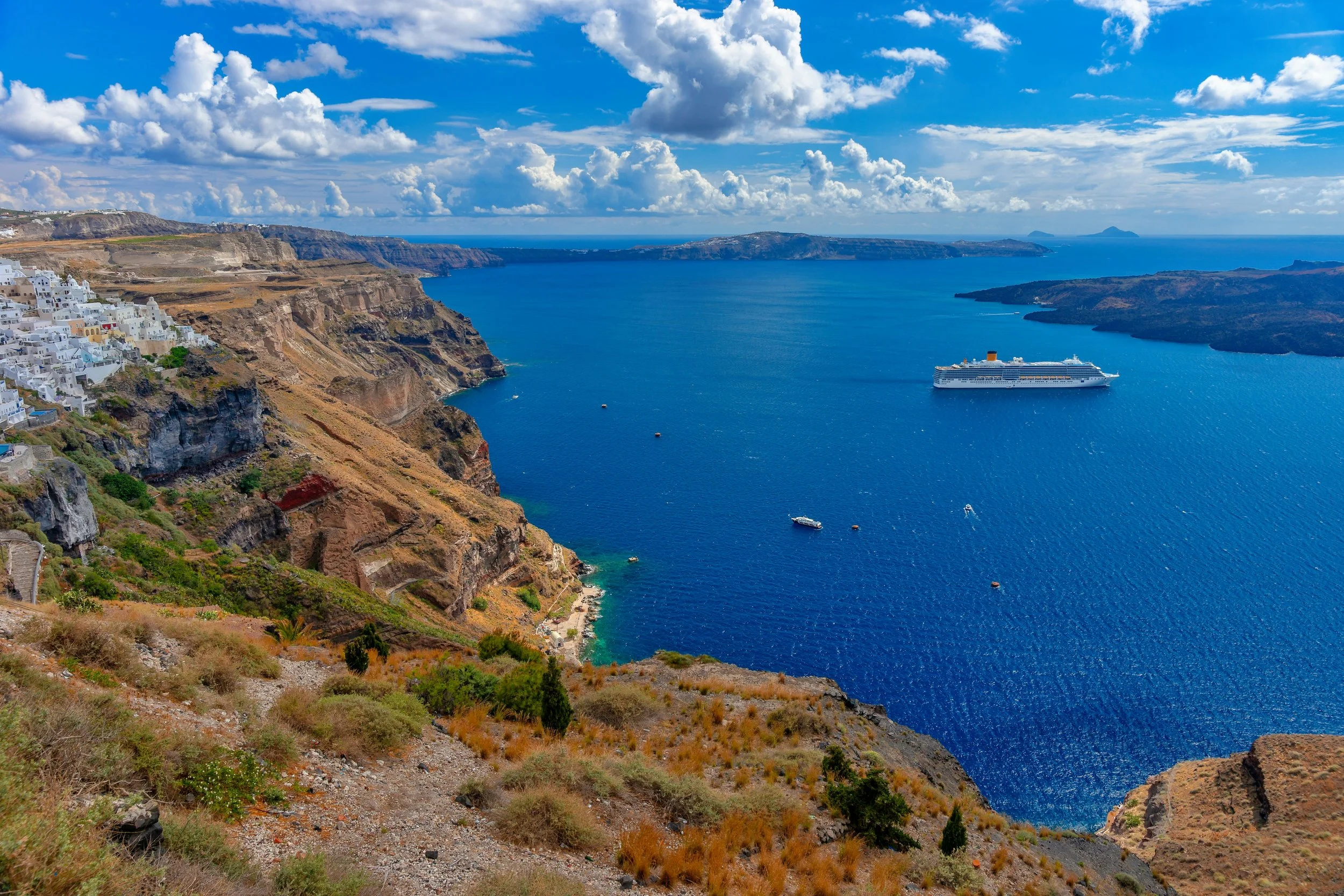
A private or small-group luxury catamaran typically departs from Ammoudi Bay or Vlychada, sailing past the volcanic islets of Palia Kameni and Nea Kameni, with a swim stop at the island's hot springs (mineral-rich, sulfurous, genuinely therapeutic), a stop at Red Beach or White Beach for snorkeling, and — on a sunset-timed sail — the single best vantage point on the island for watching the sun drop below Oia, entirely removed from the crowds jostling for a spot on land. A freshly prepared Greek meal and open bar are standard on most premium charters; for maximum privacy, a fully private catamaran (rather than a shared small-group sail) allows the route and timing to be built entirely around your group.
