
SALVATORE FERRAGAMO: History, the Vara Pump & How to Find It Vintage
There's a kind of elegance that never shouts. A low heel, a little grosgrain bow, a gold buckle catching the light. Ferragamo is the quiet-luxury house I keep coming back to, and its story is one of the most romantic in fashion.
THE STORY
Salvatore Ferragamo was born in 1898 in Bonito, in southern Italy, the eleventh of fourteen children. At nine years old he made his first pair of shoes, high heels, and decided he would be a shoemaker.
In 1914 he emigrated to the United States, first to Boston and then to California. He studied anatomy at the University of Southern California so his shoes would be truly comfortable. In 1923 he opened the Hollywood Boot Shop, dressing the feet of silent-film stars like Rudolph Valentino and Gloria Swanson, and became known as the "Shoemaker to the Stars."
In 1927 he returned to Italy and settled in Florence. Even through bankruptcy during the Great Depression, he kept inventing, including the cork wedge heel. In 1938 he created the "Rainbow" platform sandal for Judy Garland. When wartime shortages hit, he worked with cork, raffia and nylon.
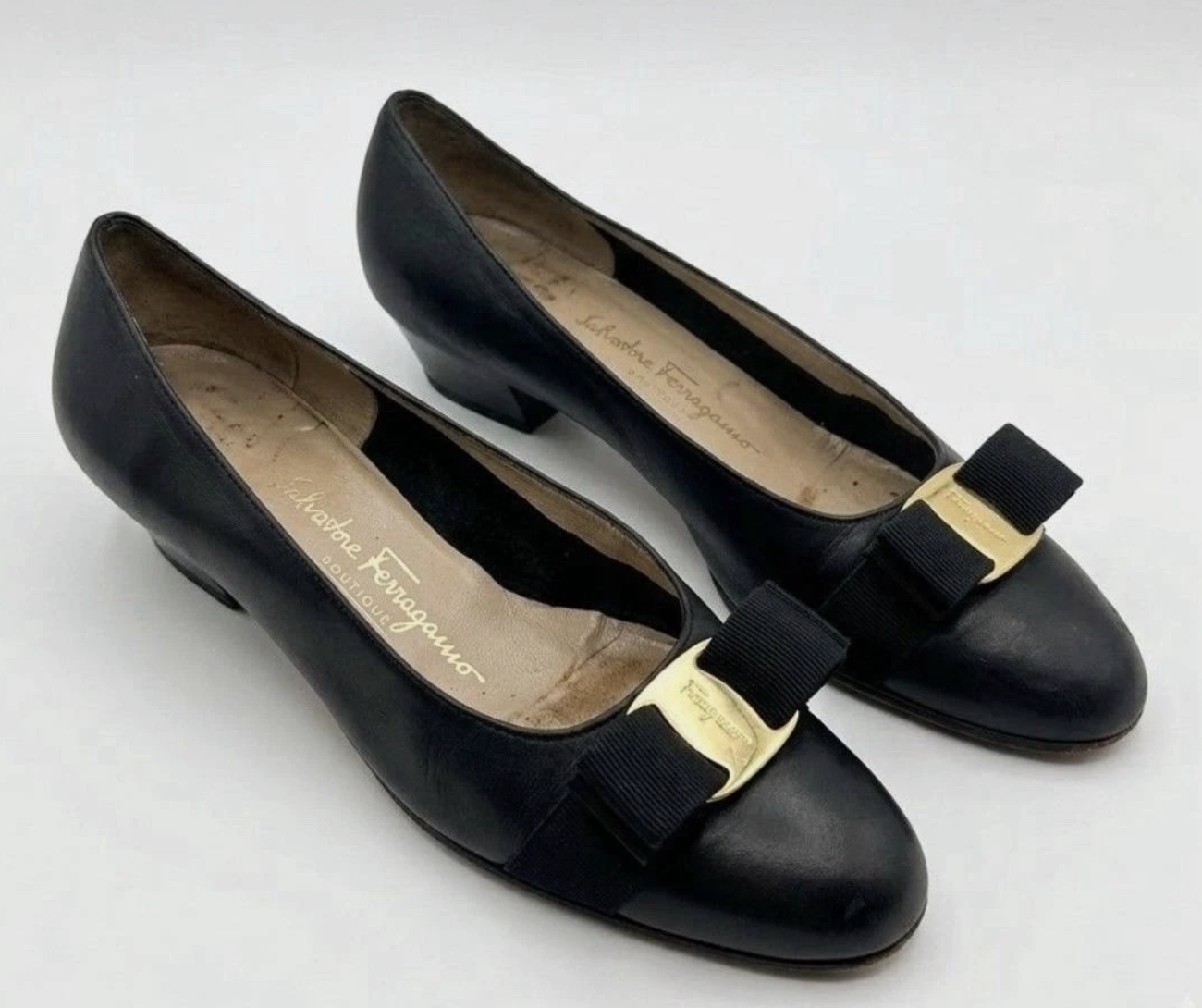
He died in 1960, and his family carried the house forward. In 1978 his daughter Fiamma designed the Vara pump, with its signature grosgrain bow. Today the Ferragamo Museum sits in Florence's Palazzo Spini Feroni, the house's historic home.
SIGNATURE PIECES
The Vara pump: a low heel, a rounded toe and the grosgrain bow with a gold plaque, designed by Fiamma Ferragamo in 1978.
Structured top-handle bags: polished leather with gold hardware.
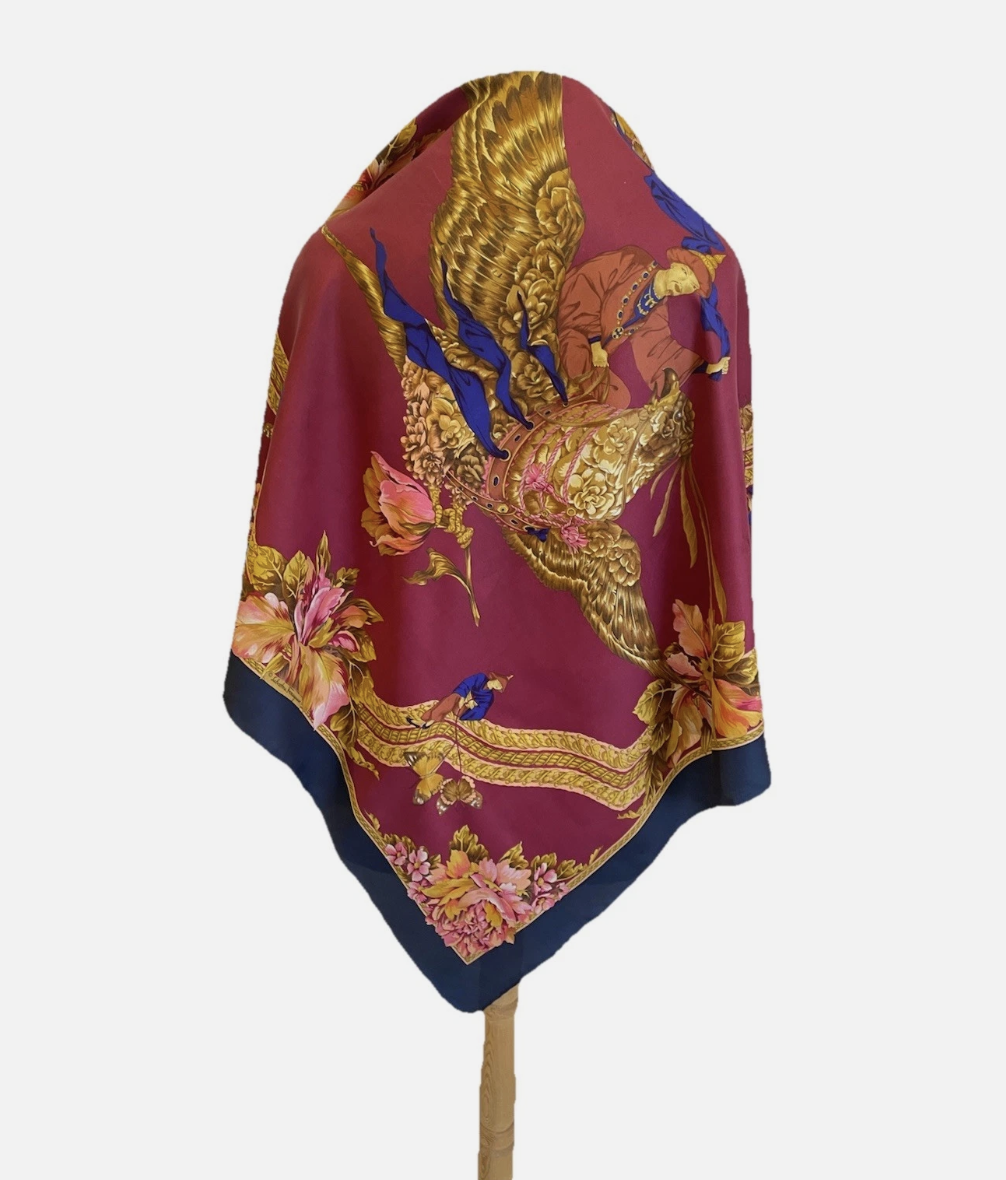
Silk scarves: printed, collectible and perfect for tying onto a bag.
Belts and small leather goods: the finishing touches of a polished look.
FUN FACTS
He made his first pair of shoes at nine years old.
He studied anatomy at university to make shoes more comfortable.
He was the "Shoemaker to the Stars" in 1920s Hollywood.
He developed the cork wedge heel during the Great Depression.
The Vara bow started as an improvised scrap of grosgrain ribbon in the atelier, and it stayed.
WHO IT'S FOR
Quiet Luxury · Polished Professional · Classic with a Twist
Ferragamo is for the woman who wants pieces she'll wear for twenty years. If you're a maximalist, use a Ferragamo bag or a pair of Varas to ground a bold outfit. That contrast is very chic.
HOW I'D WEAR IT
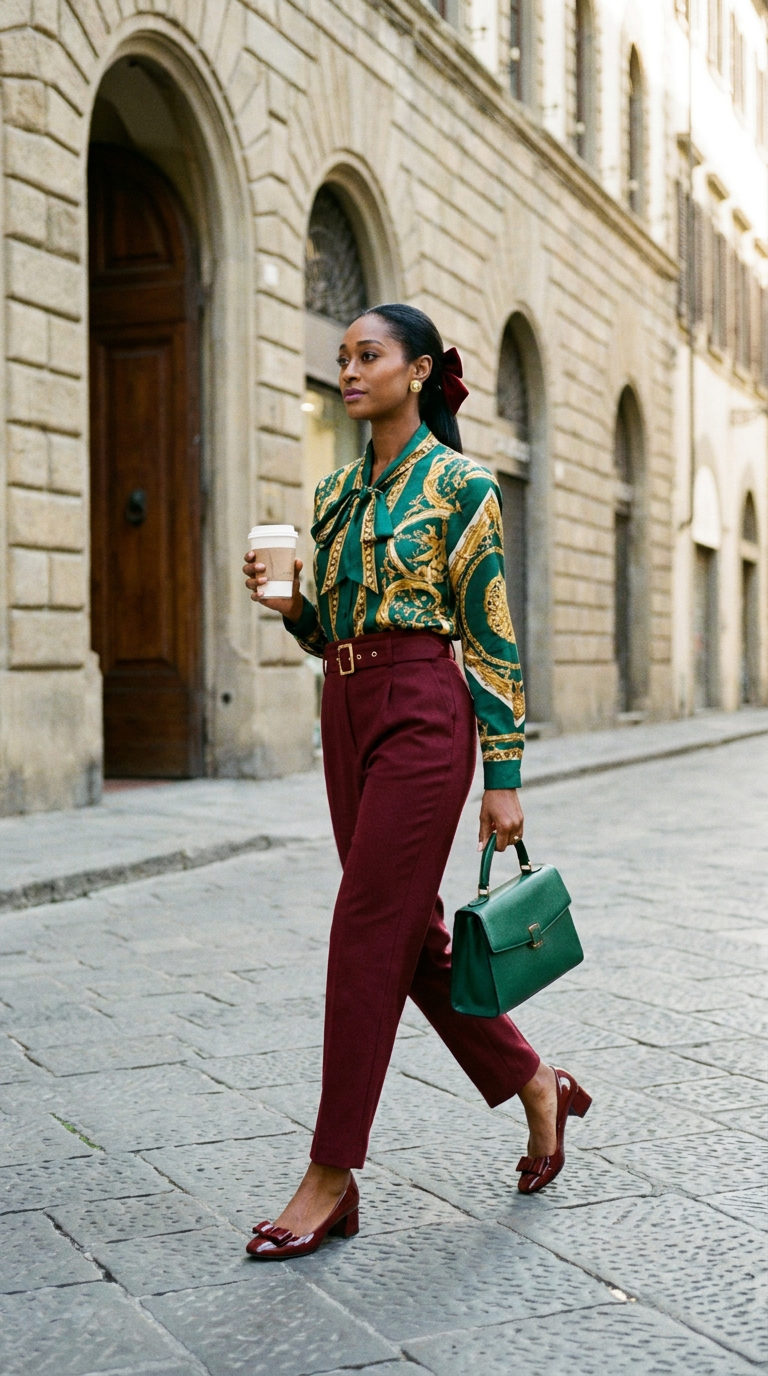
(The Office) For a regular workday, I'd let Ferragamo's prints and polish do the talking. An emerald and gold scarf-print silk blouse with a soft tie at the neck, tucked into high-waisted burgundy tailored trousers, with burgundy bow pumps in the same shade so my legs go on forever. Then an emerald top-handle bag, a gold buckle belt and a velvet bow in my hair. Two jewel tones, zero black, and it still reads completely professional. That's the Ferragamo lesson: polish lives in the details.
HOW TO FIND IT VINTAGE
Search terms:
"vintage Ferragamo Vara pumps"
"vintage Ferragamo Vara bag"
"vintage Ferragamo top handle bag"
"Ferragamo Gancini bag vintage"
"vintage Ferragamo silk scarf"
Tips:
Look for a clear "Salvatore Ferragamo" stamp and a style code inside bags.
Vintage Ferragamo shoes often list both size and width, so check the width letters, not just the number.
Ask for photos of the heel tips and soles. Resoling is common and fine if it's done well.
IF YOU LOVE FERRAGAMO, ALSO SEE… St. John · Escada · Whiting & Davis for evening bags.
XOXO,
Emsy 💕
Sources:
Salvatore Ferragamo (Wikipedia): https://en.wikipedia.org/wiki/Salvatore_Ferragamo
Ferragamo: The Vara Bow (Chadstone): https://www.chadstone.com.au/news/ferragamo-the-vara-bow
